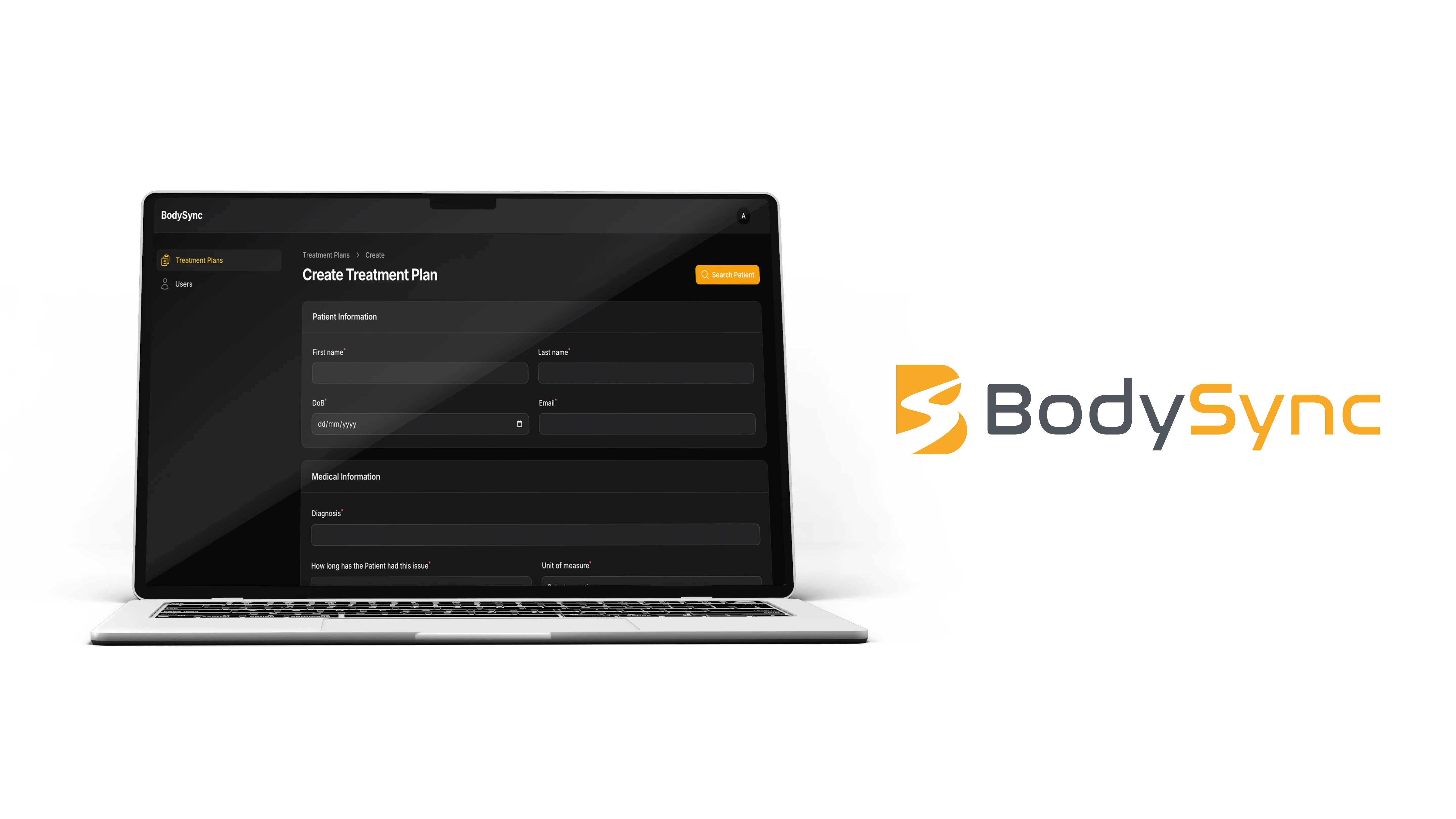
The team adopted a strategic, full-stack approach to develop BodySync from the ground up. The resulting web application guides the clinician through a structured data input process. The resulting data is then fed into OpenAI which is restricted only to pre-defined sources of clinical information, ensuring compliance.
Instead of drafting from scratch, clinicians now input key information into BodySync's intuitive form:
-
Medical Information & Diagnosis: e.g., "Rotator cuff tendinitis," including duration and unit of measure.
-
Specific Assessment Findings: Quantifying limitations by body part (e.g., Shoulder), movement (e.g., External Rotation, Abduction), Range of Motion (ROM), and patient-reported pain levels (VAS).
-
Treatment Preferences: The clinician selects desired modalities (e.g., Shockwave therapy), available equipment (e.g., Dumbbells, Resistance bands), and whether to include manual therapy.
-
Personalised Goals & History: Capturing the patient's goal activity and any relevant past injuries or other key notes.
This input is processed by BodySync's engine, which cross-references clinical best practices, evidence-based protocols, and biomechanical data to generate a comprehensive, phase-appropriate plan.
The platform was architected from the ground up for full HIPAA/GDPR compliance, ensuring all data is encrypted and secure. A dedicated function allows for the generated plan to be sent directly to Clinico with a single click, or emailed as a PDF.