Magora·Projects·Running community app
Sport & fitness · Case studyDesign & build2026

A running community app for a fitness studio.

Magora designed and built a mobile community app for a fitness studio's running members: runs come in from the apps they already use, and members share them, cheer each other on, join studio challenges and message each other, with moderation tools for the studio team.

Client
Fitness studio
Industry
Sport & fitness
Stage
Design & build
Platform
Mobile
Services
Discovery · UX/UI design · Mobile app development
Delivery
Magora London
Domain
Running & studio community
Engagement
Fixed-scope build
Journeys
Onboarding · feed · runs · challenges · profiles · messages · moderation

The client is a fitness studio with an active running crew: early-morning groups, weekend long runs, trail outings and plenty of members who are just getting started. Its members already record every run on Strava or a Garmin watch, but the community around those runs lived in scattered group chats and in apps built around speed and rankings.

The studio wanted a place of its own, where a slow comeback run gets as much encouragement as a personal best. The brief was the community side of running: share runs, cheer each other on and stay close to the crew, without asking anyone to change how they track, and with the studio team able to keep the space friendly.
We started with a short discovery phase to agree the moments that matter: joining, bringing in your runs, seeing the crew's week, reacting to a run, and taking part in a studio challenge. Everything else was built around that loop.

Three decisions shaped the product. First, import, never track: members connect Strava or Garmin Connect once and their recorded activities flow in, so there is no double-tracking. Second, community before competition: challenges show shared progress towards a goal, leaderboards include every pace, and the guidelines are agreed at sign-up. Third, safety built in: hiding, reporting and blocking are two taps away, with a moderation queue for the studio team.

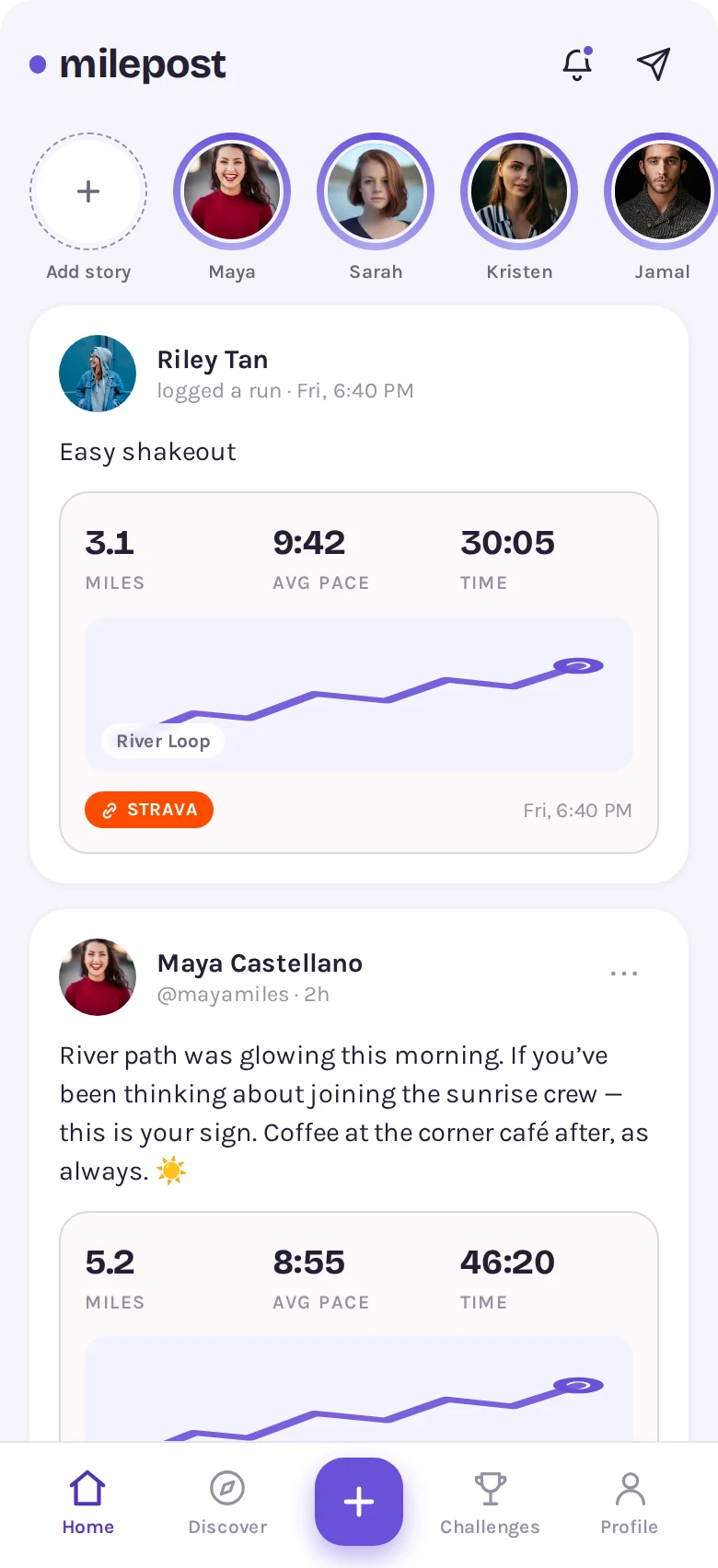
The interface is calm and warm, with run cards that put distance, pace, time and the route first, and a palette defined as design tokens so the studio's brand can be applied without redrawing screens.

What we built

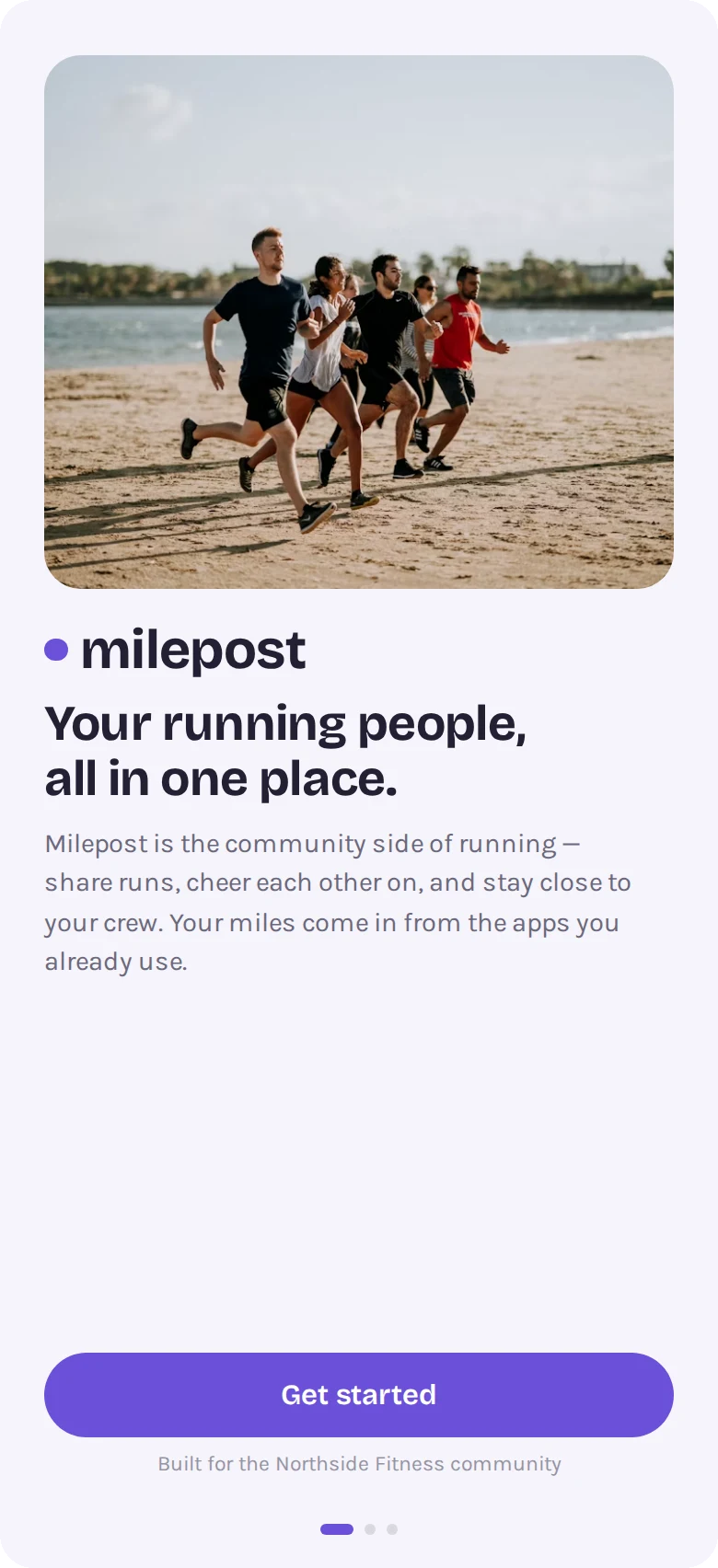
  • Onboarding. Sign in with Apple, Google, Facebook or email, agree the community guidelines and connect a running app in the same flow.
  • Feed and stories. Runs and posts from the people you follow, each run with its distance, pace, time and route, plus 24-hour stories from the crew.
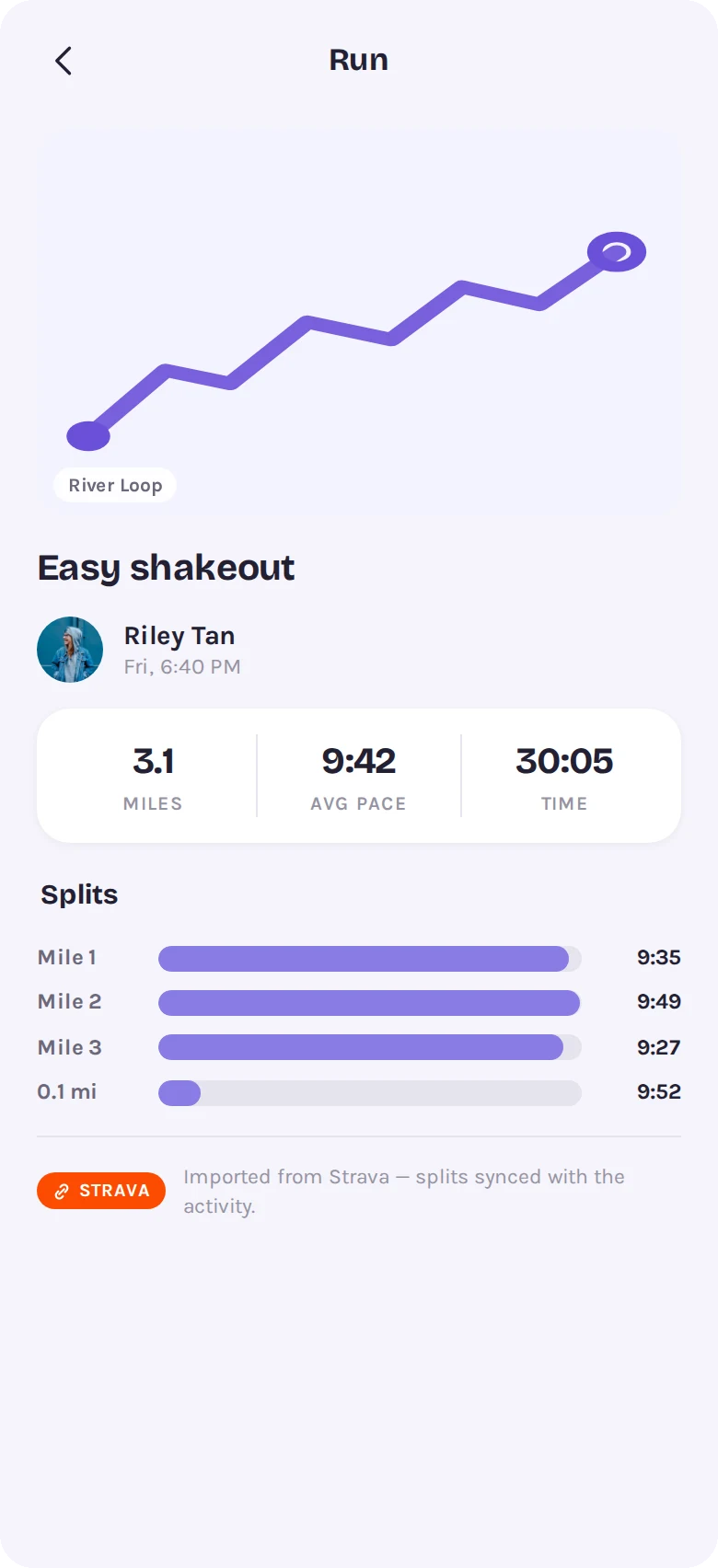
  • Run page. The route, the headline numbers and mile splits for every imported run.
  • New post. Share a thought, attach one of your runs and add a photo.
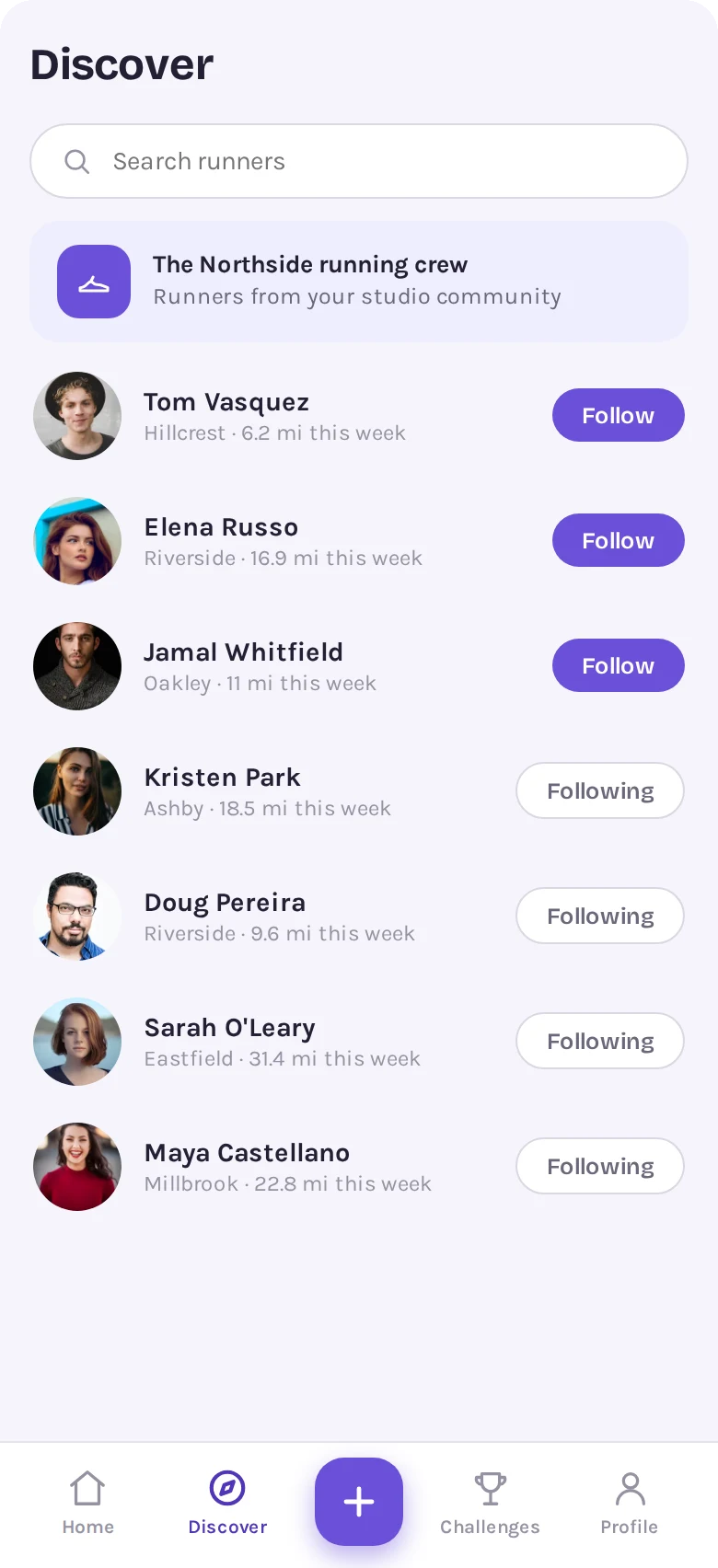
  • Discover. Search runners, see the studio's running crew and follow people with their weekly mileage alongside.
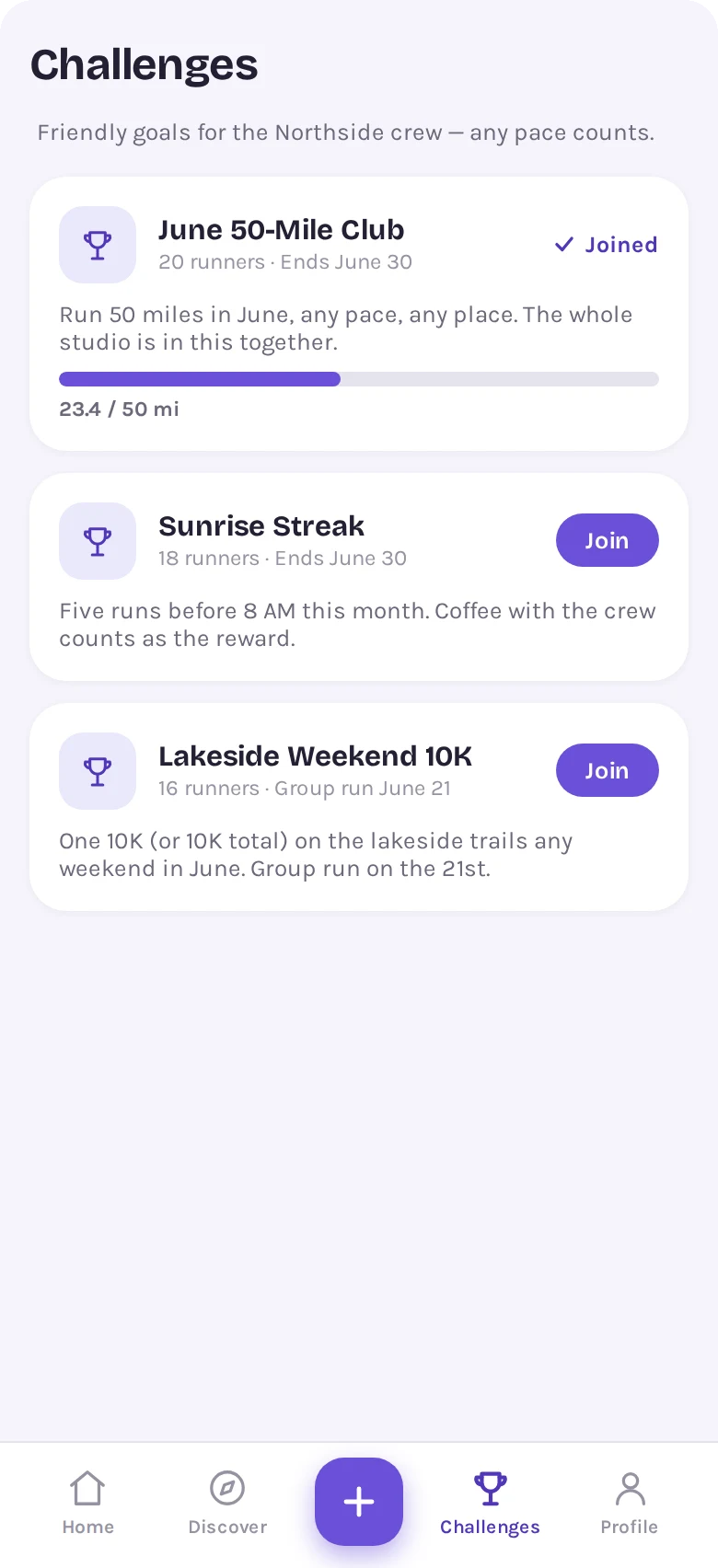
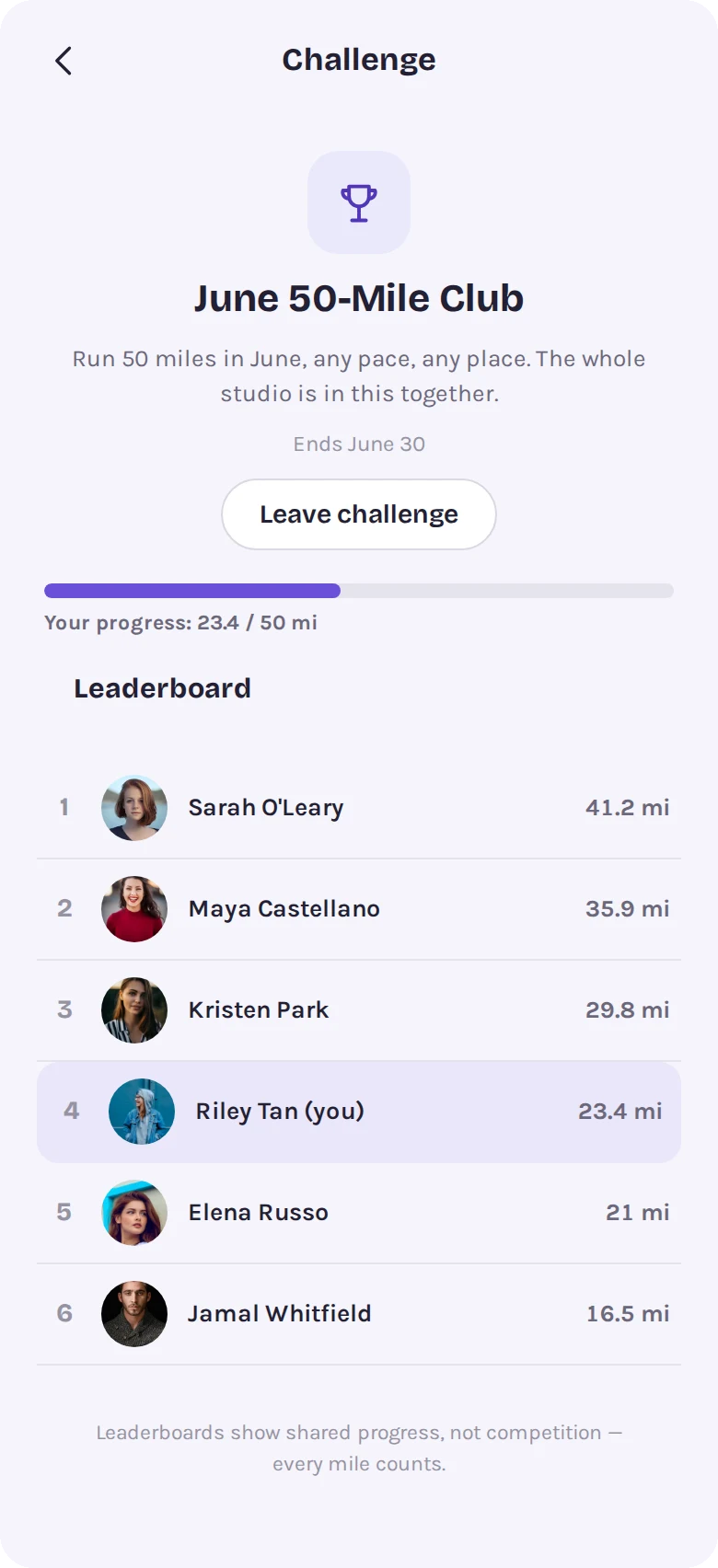
  • Challenges. Studio goals such as a monthly mileage club or a sunrise streak, with personal progress and a leaderboard that includes every pace.
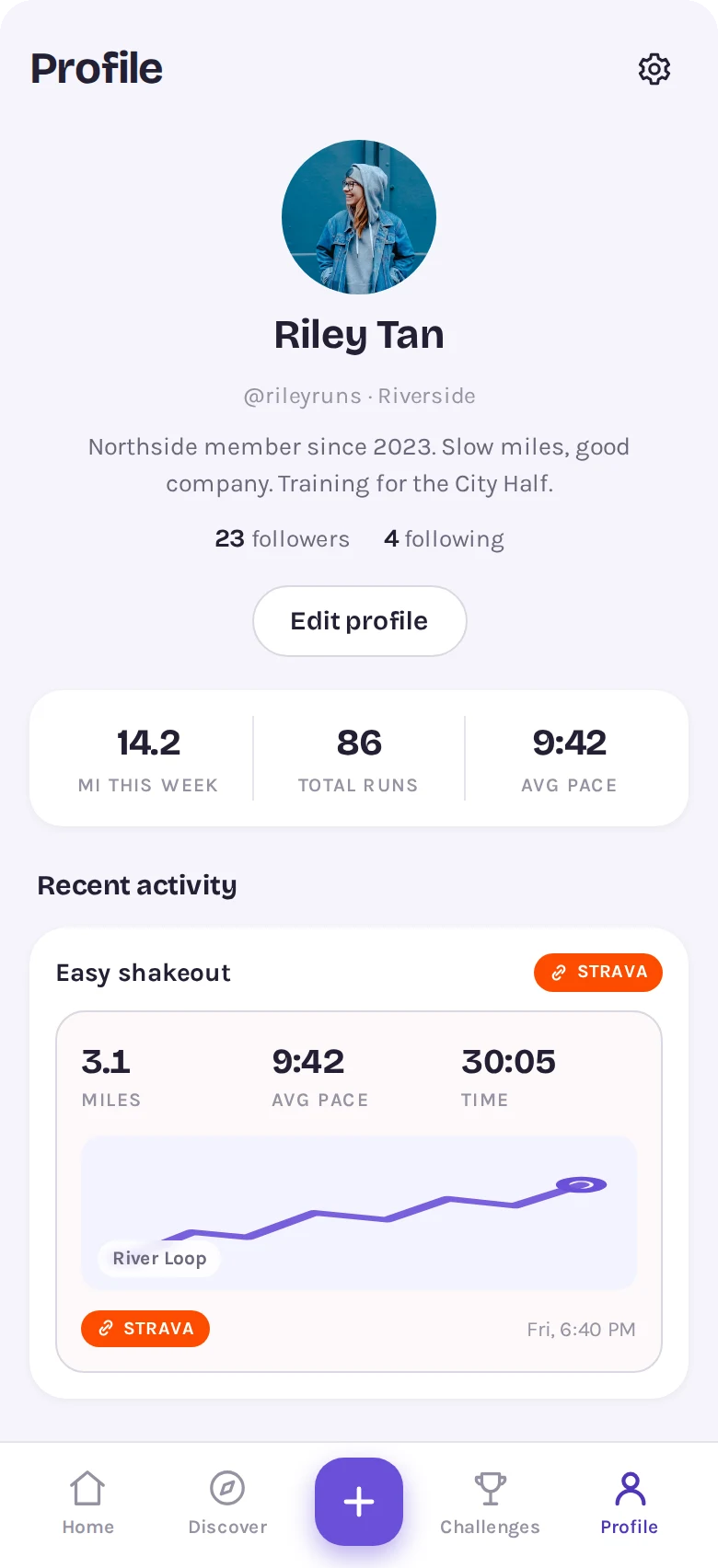
  • Profile. Bio, weekly miles, total runs, average pace and recent activity, with profile editing and connected apps in settings.
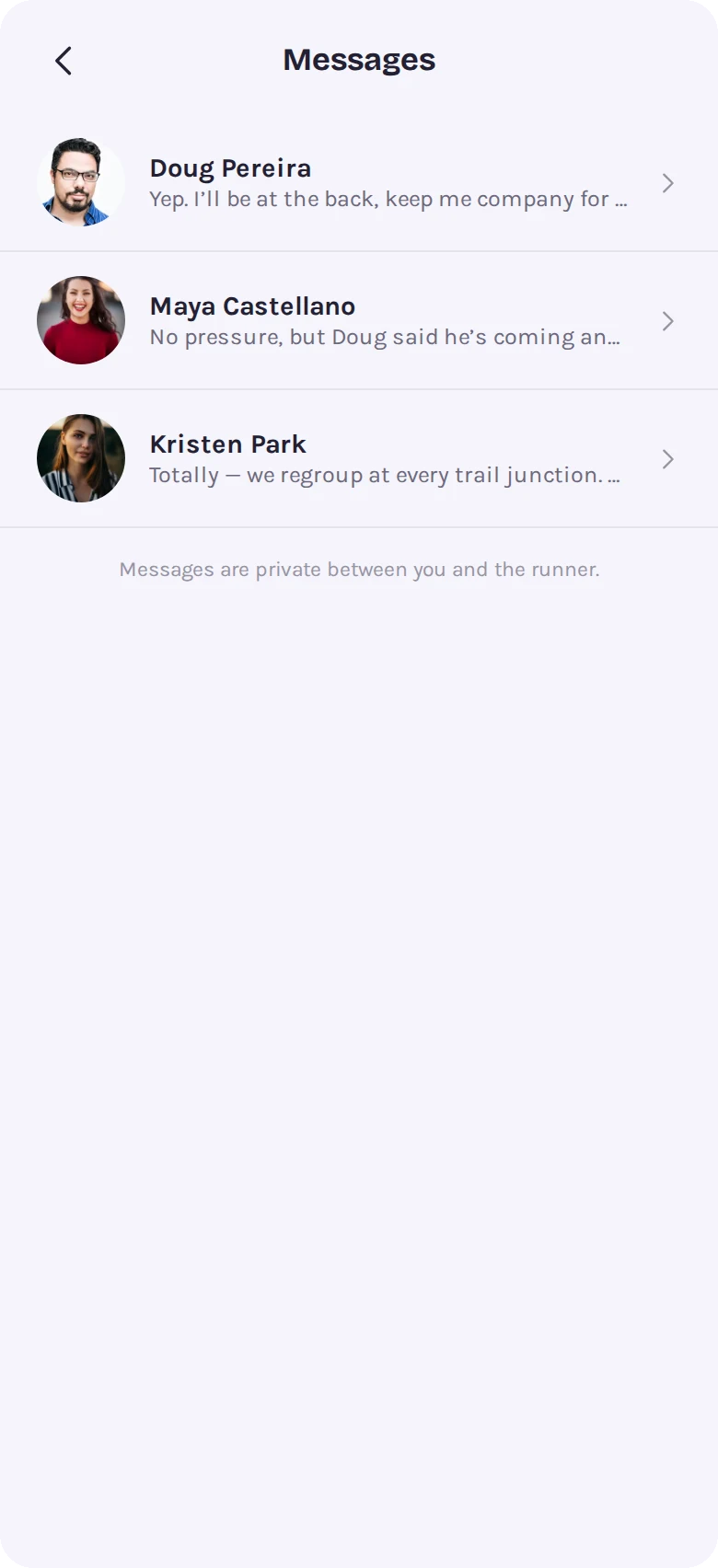
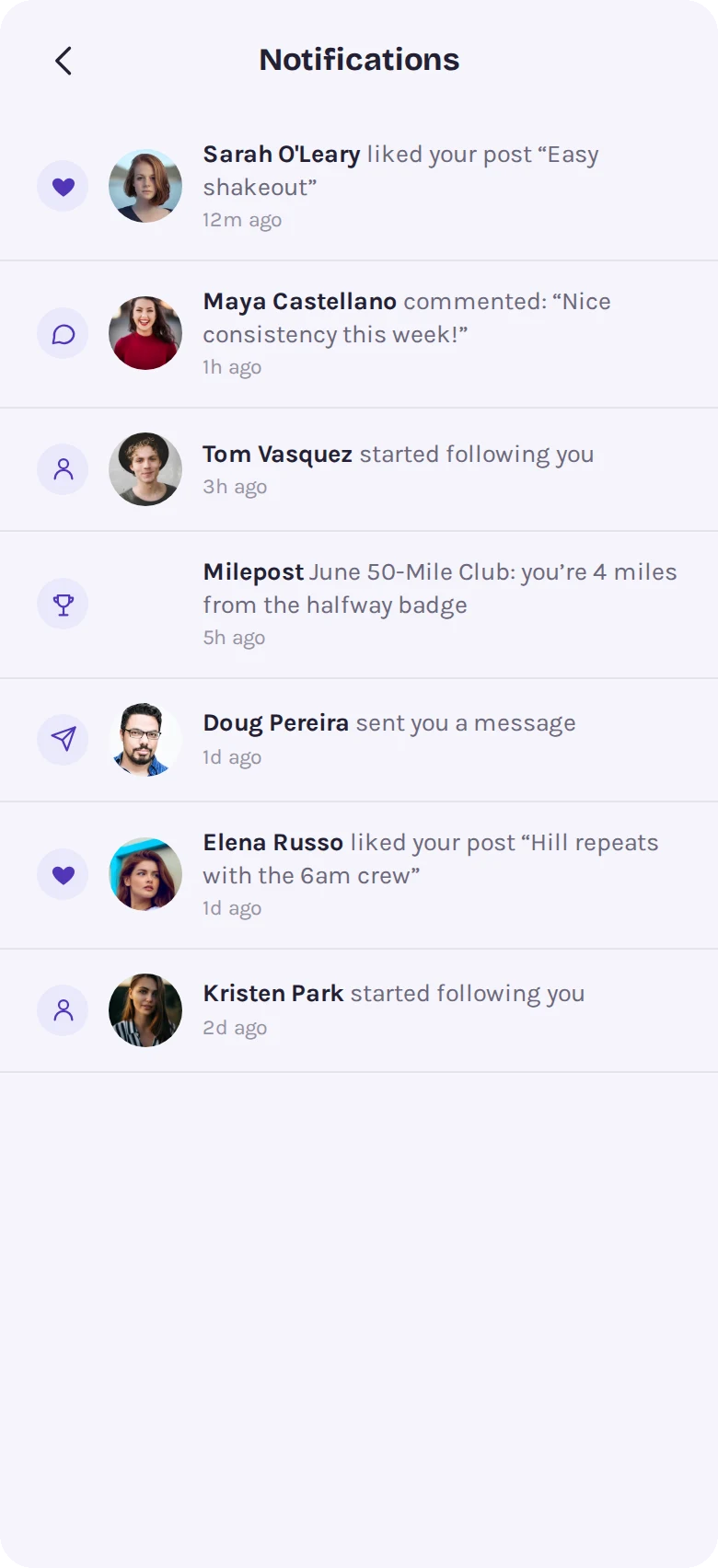
  • Messages and notifications. Private conversations between members, and alerts for likes, comments, follows and challenge milestones.
  • Moderation. Hide and report posts, block members, and a queue where studio staff review reports and restore content.
Onboarding screen: your running people, all in one place
Onboarding
Community feed with run cards and stories
Feed with run cards
Run page with the route, pace and mile splits
Run with splits
Studio challenges with progress for each member
Studio challenges
Challenge page with progress and a leaderboard
Challenge leaderboard
Discover runners from the studio crew
Discover runners
Member profile with weekly miles, total runs and average pace
Member profile
Private messages between members
Messages
Notifications for likes, comments, follows and challenges
Notifications

Want to see it in action? Talk to the team and we will take you through the app.

The studio has a complete mobile product that covers the member journey end to end, from sign-up and connecting a running app to the feed, challenges, messages and moderation, together with one component system to extend it from and a feature-by-feature basis for planning the next releases, such as creating stories and a separate web panel for studio staff.

It is the way we recommend starting any community MVP: agree the core loop, design it properly and build it on a foundation that can grow. The same approach carries over to native apps from our mobile app developers in London and to other health and fitness apps. Client names and figures in the screenshots have been changed, and the client is not named.

The project in numbers.

2
Running apps connected · Strava and Garmin Connect
0
Runs tracked twice · activities are imported
4
Sign-in options
5
Tabs · home, discover, post, challenges, profile
£3k
Approx. discovery sprint
2 weeks
Approx. discovery timeline
£22–28k
Approx. first release budget
10–12 weeks
Approx. time to first release

Typical budget for an app of this scope, from our published price bands; indicative, excluding VAT. Every project is priced after a discovery sprint.

Tech stack.

React 18JavaScript (JSX)CSS design tokensMobile-first UIClient-side state

Related: mobile app development · MVP development · discovery phase · health & fitness apps

Questions founders ask us.

How much does a community app like this cost to build?

It depends on scope, integrations and platforms. A focused MVP typically starts from £10,000 and a full production build from £30,000; a first release of the scope shown here usually lands at around £22–28k. Every project is priced after a discovery sprint.

Can the app bring in runs from Strava or Garmin?

Yes. Strava and Garmin both offer developer APIs: a member connects their account once, and the activities they already record are imported with distance, pace, time and route, so nobody has to track a run twice.

How do you keep a members' community safe?

Members can hide and report a post or block another member in two taps, reports go to a moderation queue for studio staff, and the community guidelines are agreed at sign-up. The design keeps leaderboards about shared progress rather than competition.

Got a similar problem?

Want your project on this page next?

30-minute call with the team behind this build. We'll tell you what we'd actually do in your shoes — no decks, no sales talk.

Book a call
— Cookies

We use cookies to measure traffic and make our marketing more relevant. Necessary cookies stay on. See our Privacy and Cookie Notice.

Free 30-min consult Free consult