The production bottlenecks Apple faced with the iPhone X, from component supply to Face ID, and what analysts expected for the launch volumes.
Still on the subject of the iPhone X release described in our previous article, now let’s consider the main points Apple faced with their innovative device. The security analysts from different IT companies describes Apple’s new smartphone weaknesses.
Ming-Chi Kuo informs that Apple plans to release about 25 - 30 million iPhone Xs for the fourth quarter. To date, there are only 2 - 3 million smartphones ready. But before coming in first in the iPhone X buyer race, find out how everything is going.
Bottleneck 1. Antenna module
Unlike the iPhone 8, the production of the iPhone X antenna is much more complicated from a technical point of view. Apple uses flexible printed circuit boards that require special equipment and materials.
The production of these cards is handled by two companies: Murata and Career Tech. Murata supplied more than 60% of the antenna modules and can not cope with the manufacturing volume. While Career has just started to increase production rates.
“Special materials, design, processes, equipments and tests are required for antenna FPCB, as the specifications for iPhone X antenna (supplied by Amphenol (US)) are higher than those of iPhone 8, and only Murata (JP) and Career Tech (6153 TT, NT$30.1, NR) can meet Apple's requirements. Murata (originally with a 60% order allocation or higher) won't be able to resolve its issues before 2Q18, and thus has been fully replaced by second supplier Career. We believe Career will ramp up in November, as capacity expansion takes time, and its processes are different from those of Murata.”
We design and build iOS and Android apps for UK businesses and start-ups, from prototype to the App Store. First release in 6–8 weeks; developers from £49/hour.
Bottleneck 2. Main Camera PCB
While other smartphones, Samsung and Huawei, use a combined electronic board in dual-camera smartphones, in the iPhone X, a separate module is provided for each sensor.
In production, the key supplier Interflex faced a low-quality circuit designed for a wide-angle sensor. It took a lot of time to troubleshoot the issue, but it was unclear whether the result was obtained.
Bottleneck 3. TrueDepth Sensor
Another "obstacle to progress" is the module TrueDepth - infrared dot projector, necessary for the operation of the face scanner, or the Romeo component.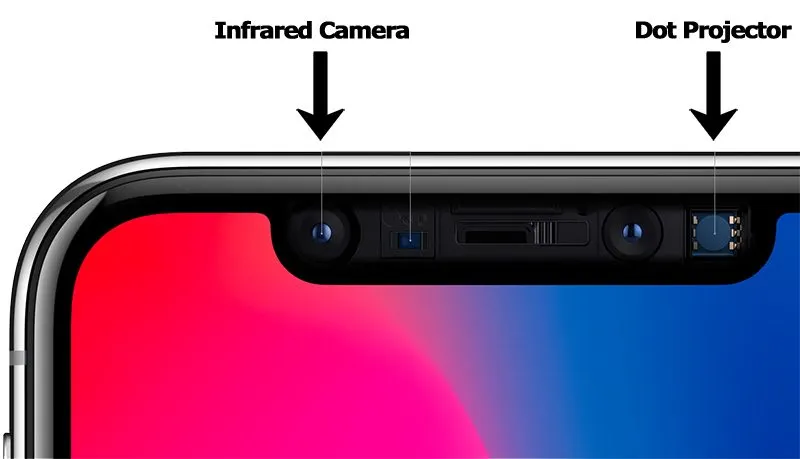
The development of the TrueDepth module led to poor facial recognition due to the incorrect operation of the IR sensor.
Moreover, only one company is engaged in the production, and it is not yet able to meet the quantitative demands of Apple.
The first batch of smartphones could be very problematic on the hardware side. So, I personally refrain from buying the iPhone X in the first months of sales, and believe, that the situation will change for the better in the nearest future.
Fun time:

Nick Selin
Nick is a Consulting Director at Magora. He focuses on driving growth and creating valuable partnerships. With a sharp eye for market trends and a natural ability to connect with people, Andrew leads initiatives that keep Magora at the cutting edge of innovation and success in the tech industry.
LinkedIn